
Belgian tax law distinguishes between tax-free asset management and taxable speculation. Test yourself with 17 questions.
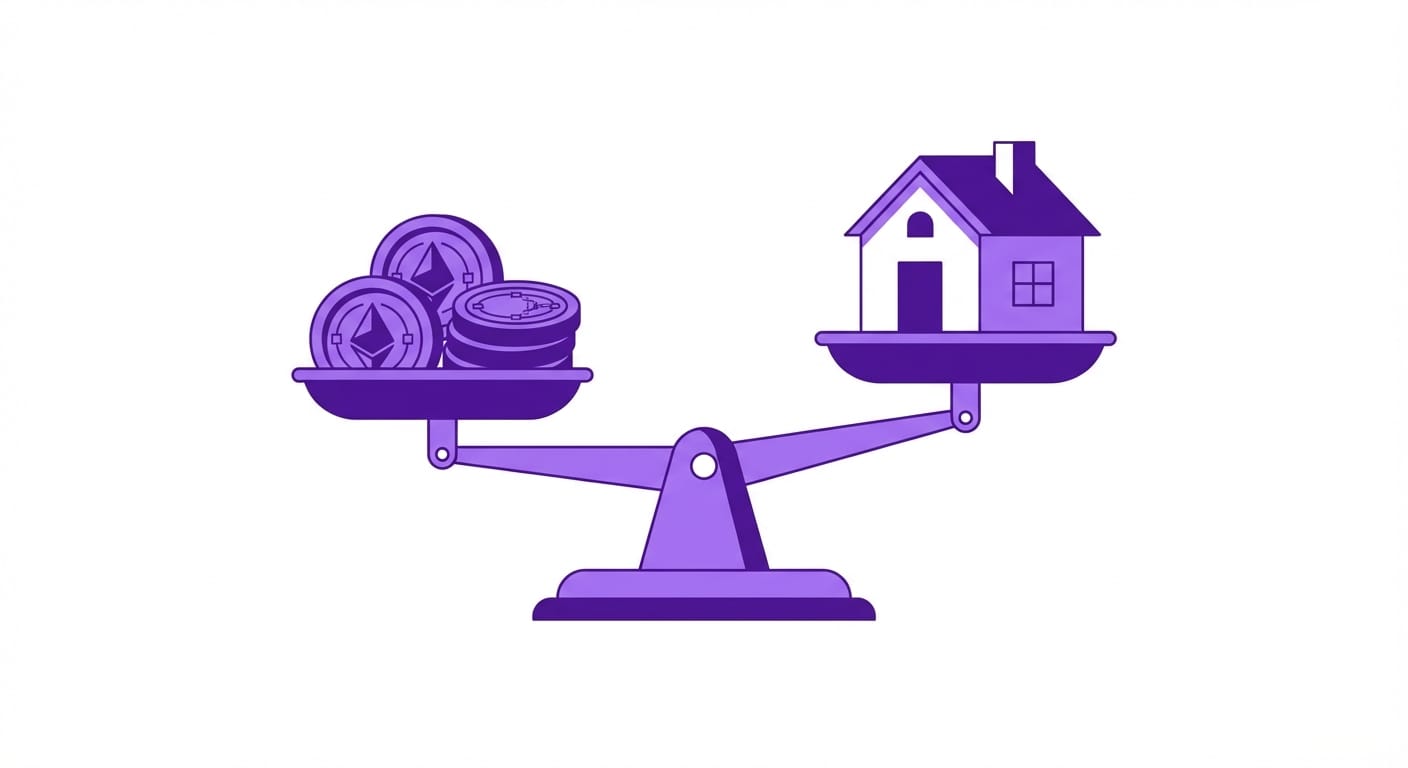
Many Belgian crypto investors ask themselves the same question: do I have to pay tax on my crypto gains? The answer depends on a crucial concept in Belgian tax law: the principle of the prudent person (goede huisvader), also known as the "normal management of private assets".
In this article we explain what this principle entails, which criteria the FOD Financiën (Belgian tax administration) applies, and how you can estimate for yourself how the tax authorities would assess your situation. Answer the questions honestly and get a realistic picture of your tax position.
What is the "prudent person" principle?
Belgian tax law makes a fundamental distinction between three categories of crypto income:
- Normal management of private assets (0% until 2025, 10% from 2026): You manage your crypto investments the way a careful and reasonable person, a "prudent person" or bonus pater familias, would manage their private assets. Up to and including 2025 this was entirely tax-free. From 2026 onwards a 10% capital gains tax applies above an annual exemption of EUR 10,000.
- Speculative gains (33% tax): You take abnormal risks that go beyond what a careful person would do.
- Professional income (up to 50% tax): Your crypto activities constitute a professional occupation.
The term "prudent person" (goede huisvader) comes from the Civil Code and refers to someone who manages their assets with the care and prudence you may reasonably expect from a sensible person. This does not mean you may not take any risk, investing always involves risk, but rather that you do not take excessive risks.
The 7 criteria of the FOD Financiën
The Belgian tax administration assesses your situation on the basis of a series of criteria. No single criterion is decisive on its own; what matters is the overall picture.
1. Percentage of your total assets
What percentage of your total assets have you invested in crypto? A prudent person spreads their risk and does not put everything on one card.
- Low risk: Less than 10-15% of your total assets
- Acceptable: 15-25% of your total assets
- Elevated risk: More than 25% of your total assets
- Speculative: More than 50% or all of your savings
2. Use of borrowed money
Have you borrowed money to invest in crypto? The use of leverage or credit is regarded by the tax authorities as a clear sign of speculation.
- Personal loan taken out for crypto purchases
- Margin trading on exchanges
- Mortgage increased for crypto investments
- Credit card used for crypto purchases
Note: Even if you make a profit, the use of borrowed money can automatically place you in the speculative category.
3. Frequency of transactions
How often do you buy and sell? A prudent person does not trade daily or weekly, but makes well-considered decisions over the longer term.
- Passive (prudent person): A few transactions per year, buy-and-hold strategy
- Moderately active: Monthly rebalancing or periodic purchases (DCA)
- Active (elevated risk): Weekly trades, actively responding to market movements
- Very active (speculative): Daily trading, scalping, arbitrage
4. Holding period
How long do you hold your crypto before selling? Short holding periods point to speculation; long periods to asset management.
- Long term: Holding for several years
- Medium term: 1-2 years
- Short term: A few months
- Very short: Days or weeks
5. Use of professional tools and techniques
Do you use advanced trading techniques that are normally reserved for professional traders?
- Trading bots and automated strategies
- Technical analysis with professional software
- Futures and options
- Leveraged products (leveraged tokens)
- Short selling
6. Time spent
How much time do you spend on your crypto activities? A prudent person manages their assets in their spare time; a professional makes it their job.
- Minimal: Occasionally checking your portfolio, following the news
- Moderate: A few hours per week
- Intensive: Actively engaged daily
- Professional: Several hours per day, a full-time occupation
7. Dependence as a source of income
Is crypto income a supplement to your regular income, or are you dependent on it for your livelihood?
- Do you have a regular job or other sources of income?
- Do you use crypto gains for daily expenses?
- Would you run into financial trouble without crypto income?
Self-test: The 17 questions of the tax authorities
The FOD Financiën uses an extensive question framework to determine whether someone is acting as a prudent person. Answer the questions below honestly to make an assessment of your situation.
About your investment strategy
- Do you have a diversified portfolio (multiple coins/tokens)?
- Do you base your investment decisions on fundamental research?
- Do you have a long-term vision (several years)?
- Do you regularly invest small amounts (DCA) or large sums at once?
- Do you have a predetermined exit strategy?
About your trading behavior
- How many transactions do you carry out on average per month?
- Do you react impulsively to price swings?
- Do you use stop-loss orders or other automatic triggers?
- Do you trade on multiple exchanges at the same time?
- Have you ever used margin trading or futures?
About your financial situation
- What percentage of your total assets is in crypto?
- Have you borrowed money for crypto investments?
- Can you afford to lose the invested amount?
- Do you have other investments besides crypto (stocks, bonds, real estate)?
About your knowledge and time spent
- How many hours per week do you spend on crypto-related activities?
- Do you actively follow trading courses or seminars?
- Do you consider yourself an "advanced" crypto trader?
How do you interpret the results?
Mainly "prudent person" answers:
- Long holding periods, few transactions
- No leverage or borrowed money
- Less than 25% of assets in crypto
- Passive buy-and-hold strategy
- Minimal time spent
Mainly "speculative" answers:
- Frequent trades, short holding periods
- Use of margin or futures
- A large share of assets in crypto
- Active trading strategies
- A lot of time spent on trading
Warning signs for "professional income":
- Trading is your main activity
- You are dependent on crypto income
- You offer trading services to others
- You have an organized trading structure
Tax rates: what do you effectively pay?
Current situation (until the end of 2025)
| Category | Tax rate | Conditions |
|---|---|---|
| Normal management of private assets | 0% | Prudent person criteria met |
| Speculative gains | 33% + municipal surcharge | Miscellaneous income (diverse inkomsten) (art. 90, 1° WIB) |
| Professional income | 25-50% progressive | Professional activity |
New regime from 2026
Important: From 1 January 2026 the tax landscape for crypto in Belgium changes fundamentally. The federal government has introduced a 10% capital gains tax on securities and crypto assets.
This means:
- Capital gains on crypto from normal management are taxed at 10% (above an annual exemption of EUR 10,000)
- Speculative gains remain taxed at 33% + municipal surcharge
- The distinction between "prudent person" and "speculative" therefore remains crucial: it determines whether you pay 10% or 33%, a difference of 23%
- Losses under the 10% regime can be offset against capital gains of the same year (not carried forward)
✅ Update: The capital gains tax law was approved by the Chamber of Representatives on 3 April 2026, published in the Belgian Official Gazette on 21 April 2026 (Law of 6 April 2026), and applies retroactively from 1 January 2026.
Practical tips for the prudent person
Document your strategy
Put in writing why you invest and what your strategy is. This can be valuable evidence in the event of an audit.
Keep a transaction log
Keep all purchase and sale receipts, including the reasons behind your decisions. A tool like Cryptotax can help you maintain a complete overview.
Avoid red flags
- No borrowed money for crypto
- No margin trading or futures
- Hold for at least 1-2 years
- Limit crypto to a maximum of 25% of your assets
- At most a few transactions per month
Be consistent
If you claim a buy-and-hold strategy, then behave accordingly. Inconsistency between your statement and your transaction history is a red flag for the tax authorities.
What if you are in doubt?
The distinction between normal asset management and speculation is not always black and white. When in doubt:
- Apply for a ruling: You can ask the Ruling Commission (Dienst Voorafgaande Beslissingen, DVB) to assess in advance how your situation will be treated for tax purposes.
- Consult a tax advisor: A tax advisor with crypto expertise can assess your personal situation.
- Document everything: The better your documentation, the stronger your position in the event of an audit.
Conclusion
The "prudent person" test is not an exact science, but an assessment of the overall picture. By investing deliberately, spreading your risk, and maintaining a long-term vision, you can stay within the bounds of normal asset management.
Remember: the burden of proof lies with you. Make sure you can demonstrate that you act the way a careful and reasonable person would with their private assets.
Do you want a complete overview of all your crypto transactions? Start a free scan and gain insight into your complete transaction history, the first step towards a correct tax return.
Disclaimer: This article is intended for information purposes and does not constitute tax or legal advice. Always consult an accredited tax advisor for your personal situation.