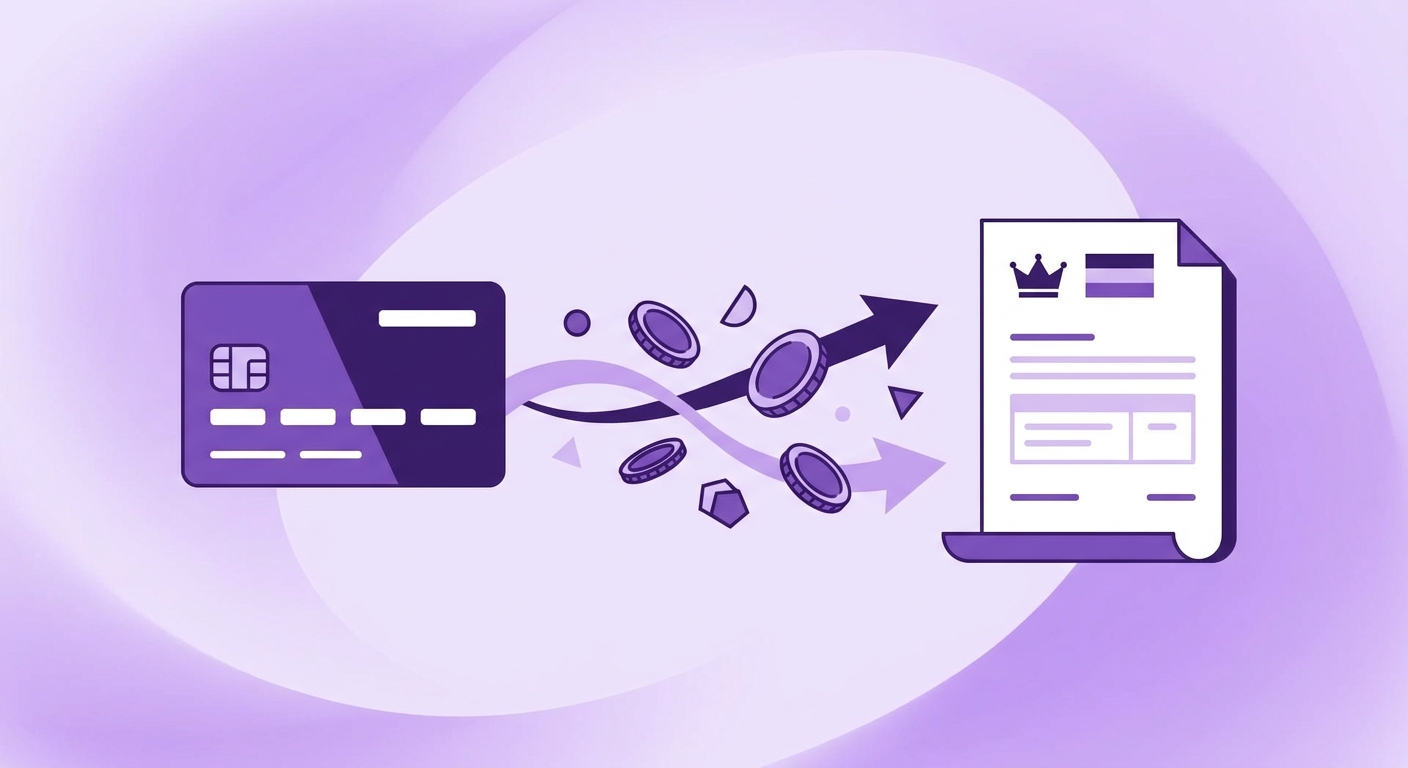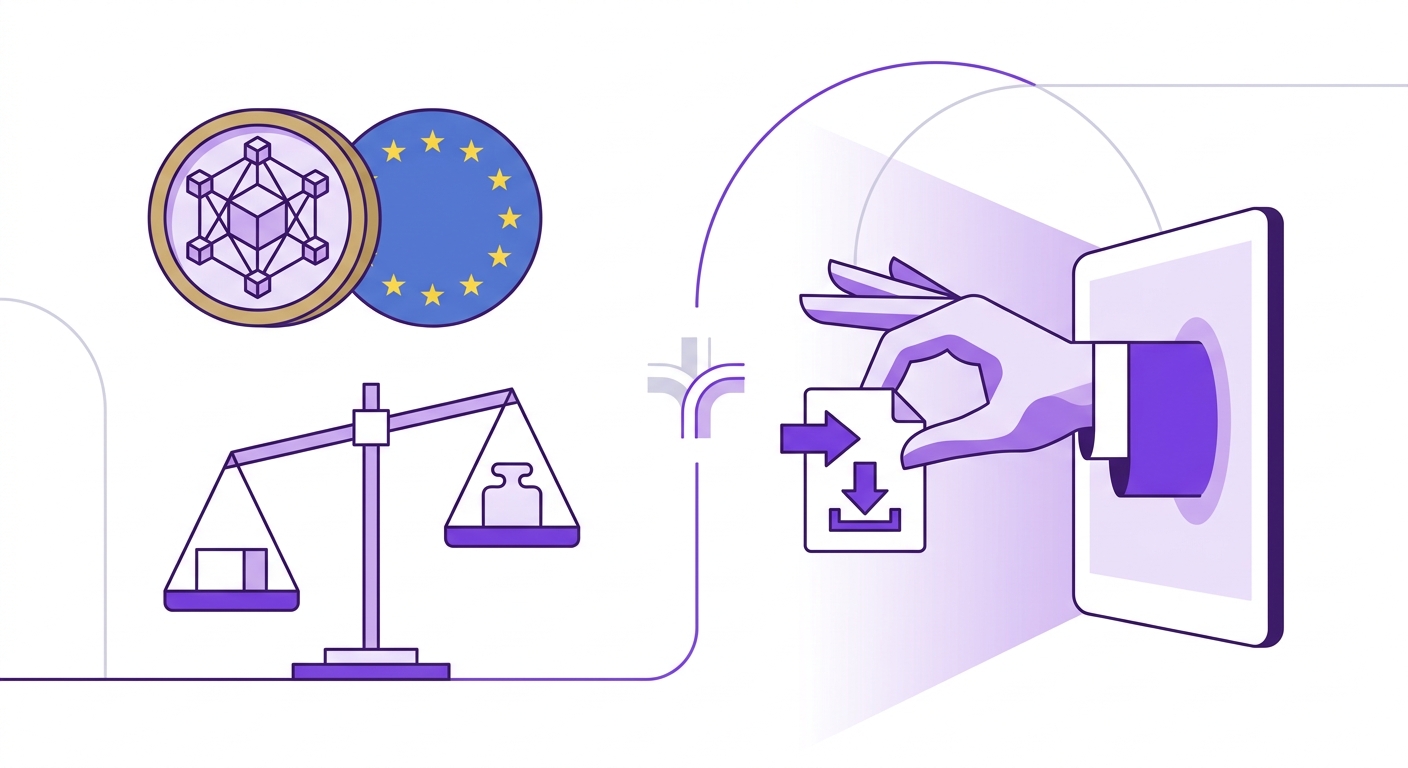


DAC8 requires crypto exchanges to automatically report transaction data to the Belgian tax authorities. The first crypto tax forms are expected in September 2027.
Last updated: April 2026 · Reading time: 5 minutes
DAC8 is the European directive that requires crypto exchanges to automatically report their users' transaction data to tax authorities. For Belgian investors, this means the tax authorities will gain direct insight into your crypto trading from 2027 onwards.
The Belgian DAC8 implementing law was adopted by parliament on 12 March 2026 and published in the Belgian Official Gazette on 1 April 2026. The reporting obligation is therefore definitively in force.
The short version (TL;DR)
- DAC8 requires crypto exchanges to report transactions, balances and identity data to tax authorities
- The Belgian implementing law has been published since 1 April 2026
- Data collection started on 1 January 2026
- First data exchange with the Belgian tax authorities: September 2027 (income year 2026)
- Exchanges must freeze accounts if you do not provide a valid self-certification after two reminders
- DeFi protocols and hardware wallets are not covered by DAC8
What is DAC8?
DAC8 (Directive on Administrative Cooperation, 8th amendment) is a European directive that extends the automatic exchange of tax data to crypto-assets. Where earlier versions of the directive covered bank accounts and financial products, DAC8 also brings crypto under supervision.
In practical terms, Crypto-Asset Service Providers (CASPs), that is exchanges, brokers and custodial platforms, must collect data about their users and pass it on annually to the tax authority of the country where the user is a tax resident.
Belgium and DAC8: state of play
Belgium was late in transposing DAC8 compared with neighbouring countries. The Netherlands was the first EU member state to issue CASP licences under MiCA and was also quicker with the DAC8 implementation. Belgium missed the original deadline, which led to an infringement procedure.
The situation has now been clarified:
- The law requires crypto service providers to collect data from 1 January 2026
- CASPs have until 1 July 2026 to make their reporting systems fully operational
- Crypto accounts must also be reported to the Central Point of Contact (CAP) of the National Bank of Belgium
- CASPs must report half-yearly balances; the preparation deadline is 1 December 2026
- In the absence of a valid self-certification after two reminders (60 days), the CASP is required to freeze the account
You can read more about the CAP obligation and how to register your exchange accounts in our CAP/DAC8 checklist.
Timeline
| Date | Event |
|---|---|
| 17 October 2023 | EU Council approves the DAC8 directive |
| 1 January 2026 | Reporting obligation in force; CASPs begin collecting data |
| 12 March 2026 | Belgian parliament adopts the implementing law |
| 1 April 2026 | Publication in the Belgian Official Gazette |
| 1 July 2026 | Deadline: CASPs must be fully compliant |
| 1 December 2026 | Deadline: CASPs prepare CAP reporting (half-yearly balances) |
| September 2027 | First crypto tax forms at the Belgian tax authorities (income year 2026) |
Which platforms are covered by DAC8?
DAC8 targets custodial crypto service providers: platforms that hold your crypto or facilitate your transactions. In practical terms, this concerns:
- Centralized exchanges (Binance, Kraken, Coinbase, Bitvavo, ...)
- Crypto brokers and custodial platforms
- Platforms that carry out crypto-to-fiat or crypto-to-crypto transactions
Not covered by DAC8:
- Hardware wallets (Ledger, Trezor), you manage your own keys
- Decentralized exchanges (Uniswap, Aave, Curve), no central entity that reports
- Peer-to-peer transactions without an intermediary
This does not mean that DeFi income is untaxed. You still have to declare it yourself in the personal income tax. The tax authorities simply have no automatic reporting for those transactions.
What is reported?
CASPs report the following data to the Belgian tax authorities:
- Identity: name, address, date of birth, tax identification number (national register number)
- Transactions: all purchases and sales (fiat-to-crypto, crypto-to-fiat, crypto-to-crypto)
- Balances: the value of your crypto holdings at year-end and half-yearly positions
- Staking and rewards: rewards received and their value
The tax authorities can compare this data with your tax return. Missing capital gains, forgotten staking rewards or undeclared accounts are thus flagged more quickly.
Impact on your tax return
DAC8 changes nothing about your obligation to declare. You still have to correctly declare your capital gains, staking rewards and other crypto income yourself. What does change: the likelihood that discrepancies are noticed rises considerably.
Concrete advice:
- Make sure your return is complete, even small amounts count
- Compare your own calculations with your exchange exports before you file your return
- Take into account the capital gains tax that has applied since 1 January 2026 (Law of 6 April 2026, approved by the Chamber on 3 April 2026, Belgian Official Gazette 21 April 2026)
- Register all your foreign exchange accounts with the CAP
What should you do now?
- Check your identity data with your exchange, make sure your name, address and tax number (national register number) are correct and up to date. Without a valid self-certification, your account risks being frozen.
- Register foreign exchanges with the CAP, this is a separate obligation alongside DAC8. See our CAP/DAC8 checklist for a step-by-step explanation.
- Export your transaction history, download your complete trading history, staking rewards and withdrawals. Keep everything for at least 7 years.
- Calculate your taxable result, use Cryptotax to calculate your capital gains automatically according to the Belgian rules.
Frequently asked questions
Is DAC8 now definitive in Belgium?
Yes. The implementing law was adopted on 12 March 2026 and published in the Belgian Official Gazette on 1 April 2026. The reporting obligation runs from 1 January 2026.
Do I need to do anything myself for DAC8?
The reporting itself happens automatically through the exchange. You do need to make sure your identity data is correct with your exchange and that your own tax return matches the data the exchange reports.
What if my exchange freezes my account?
Under DAC8, exchanges are required to freeze accounts if you do not provide a valid self-certification after two reminders (60 days). Make sure your identity data is up to date with your exchange. In the event of a freeze, contact the platform's customer service directly.
Does DAC8 also apply to DeFi and hardware wallets?
No. DAC8 targets custodial platforms (centralized exchanges). Hardware wallets and decentralized protocols are not covered. You do have to declare DeFi income yourself.
When do the tax authorities receive my data?
The first data exchange is expected in September 2027, covering income year 2026. CASPs have already been collecting the data since 1 January 2026.
Does DAC8 replace the CAP declaration?
No. CAP and DAC8 are two separate obligations. With the CAP you report the existence of your foreign accounts yourself. Through DAC8 the exchange reports your transactions. Both remain mandatory.
How Cryptotax helps
Cryptotax automatically imports your transactions from all major exchanges and on-chain wallets. The platform calculates your capital gains according to the Belgian tax rules of 2026 and generates a ready-to-use report for your return. That way you can be sure your figures match what the exchange reports through DAC8.
Start a free scan and calculate your crypto tax for 2026.
Want to read more? Check out our guides on the capital gains tax, crypto tax 2026 and the CAP/DAC8 checklist.
Sources:
Disclaimer: This article is purely informative and not individual tax advice. Consult a recognized Belgian tax advisor for specific cases.