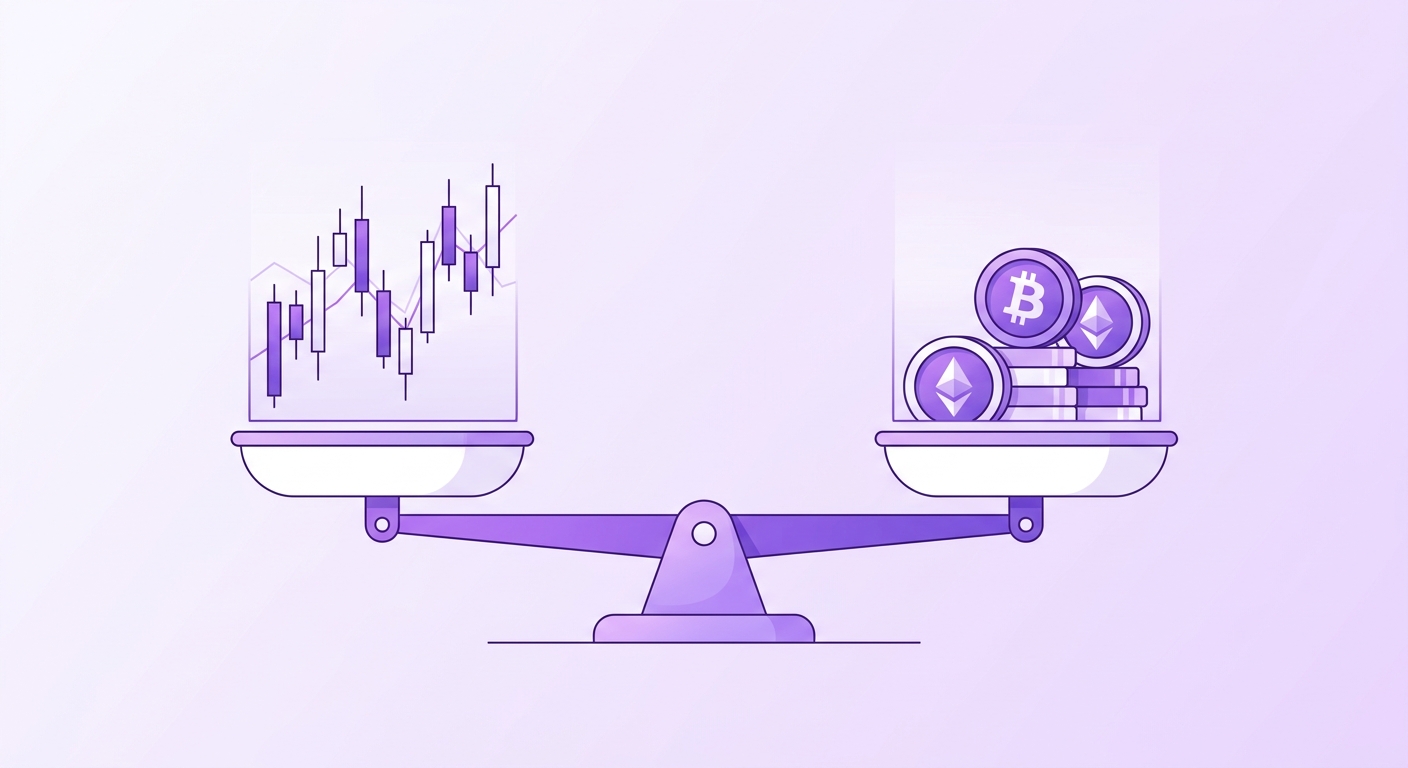

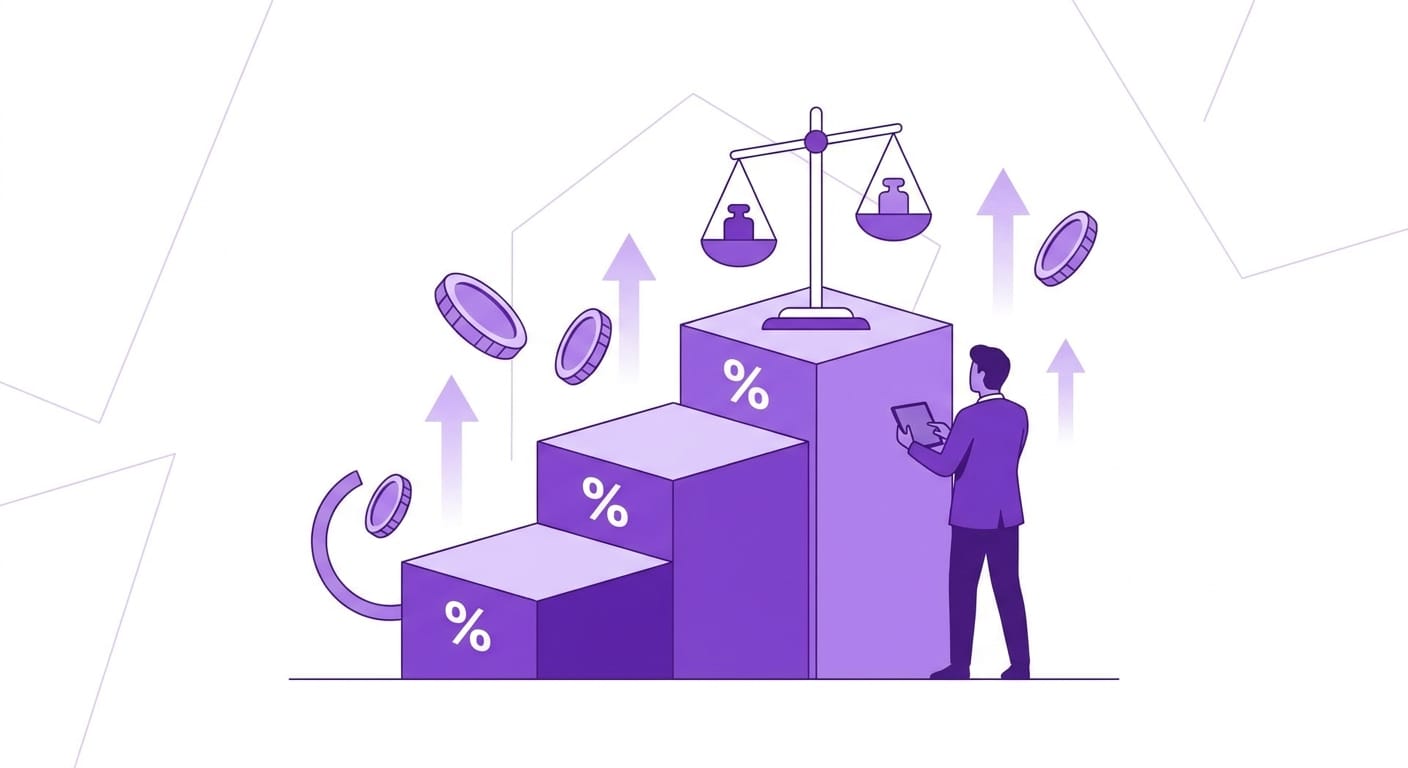
The difference between 10%, 33%, and 50% tax on crypto depends on how your activity is classified. Learn the three regimes with concrete criteria and calculation examples.
You trade crypto actively. But when does the Belgian tax authority consider you to have gone too far? The difference between 10%, 33%, and 50% tax depends on how your activity is classified. In this guide we explain the three tax regimes, with concrete criteria, calculation examples, and tips to protect your position.
🔍 Three regimes, three rates
Belgium does not tax crypto based on which coins you buy, but based on how you invest. The tax authority assesses your situation individually and places you in one of three categories:
| Category | Rate | Exemption | Loss offset | Typical profile |
|---|---|---|---|---|
| Normal management of private assets | 10% capital gains tax | €10.000/year | Within the same year | Buy & hold, DCA strategy, limited number of transactions |
| Speculative / Miscellaneous income | 33% + municipal tax | None | Only against other speculative gains | Frequent trading, high volumes, short holding periods |
| Professional income | 25%–50% progressive rates + social security contributions | None | Fully deductible as a professional expense | Crypto as primary income source, structural activity |
Since 1 January 2026, as a "good family man" standard (prudent person / bonus pater familias), you pay at least 10% on capital gains above €10.000. But if the tax authority establishes speculation or professional activity, the rate rises significantly.
📋 The 7 factors: how the tax authority classifies you
The Dienst Voorafgaande Beslissingen (DVB) (the Belgian advance ruling authority) uses an updated questionnaire to assess whether your crypto activity is normal, speculative, or professional. These factors carry the most weight:
- Transaction frequency - How many transactions per month? Trading daily points toward speculation or professional activity.
- Holding period - Do you buy and hold (months/years), or do you sell within days or weeks?
- Percentage of your assets - What share of your total assets is in crypto? More than 50% is a red flag.
- Financing - Do you use your own savings or borrowed money? Borrowing to buy crypto points to speculation.
- Knowledge and involvement - Are you active on crypto forums, do you follow DeFi protocols, do you use technical analysis? The DVB has explicitly asked this since April 2026.
- DeFi participation - Do you participate in staking, yield farming, liquidity pools, or leveraged trading? Participation in 100+ DeFi projects has been classified as speculative by the DVB.
- Income source - Is crypto your primary income source? If so, you are almost by definition engaged in professional activity.
No single factor is decisive on its own. The DVB makes a global assessment. But certain combinations are almost always fatal: borrowed money + high frequency + short holding period = speculative.
💰 Calculation examples per category
Scenario 1: Normal management (10%)
Anna buys €20.000 worth of Bitcoin in January 2026. She holds and sells in December 2026 for €35.000. Her capital gain: €15.000.
| Amount | |
|---|---|
| Capital gain | €15.000 |
| Exemption | – €10.000 |
| Taxable | €5.000 |
| Tax (10%) | €500 |
Scenario 2: Speculative (33%)
Bart makes 200+ transactions per month, uses margin trading, and rarely holds positions longer than a week. The tax authority classifies him as speculative. His annual profit: €15.000.
| Amount | |
|---|---|
| Capital gain | €15.000 |
| Exemption | None |
| Taxable | €15.000 |
| Tax (33%) | €4.950 |
| + municipal tax (~7%) | + ~€347 |
| Total | ~€5.297 |
Scenario 3: Professional income (progressive rates)
Clara lives from crypto trading. She has no other income and trades daily as her primary activity. Her annual profit: €50.000.
| Amount | |
|---|---|
| Taxable profit | €50.000 |
| Personal income tax (progressive rates) | ~€14.500 |
| Social security contributions (~20%) | ~€10.000 |
| Total | ~€24.500 |
The difference is enormous: the same €15.000 profit costs Anna €500 and Bart €5.297. And Clara pays almost half on €50.000. Your classification is therefore the decisive factor.
🚩 Red flags: when does your classification shift?
Watch for these signals that push the tax authority toward speculation or professional activity:
- Margin trading or leverage - Almost automatically speculative
- More than 50 transactions per month - Points to active trading
- Crypto > 50% of your total assets - Disproportionate risk
- Borrowed money for crypto - Incompatible with normal management
- 100+ DeFi projects - The DVB classified this as speculative in a ruling
- Crypto as primary income source - Then you are engaged in professional activity
- Short holding period (<6 months) - Combined with frequency: speculative
🛡️ How do you protect your "good family man" status?
Do you want to stay in the 10% category? A few rules of thumb:
- Limit your transaction frequency - DCA (dollar-cost averaging) with monthly purchases is the safest pattern
- Hold positions for a long time - The longer you hold, the stronger your "normal management" argument
- Use your own funds - Never borrow to buy crypto
- Limit your allocation - Keep crypto below 20-30% of your total assets
- Document your strategy - A written investment plan strengthens your position in the event of a tax audit
- Request a ruling - If in doubt, you can request an advance decision from the DVB
❓ FAQ: frequently asked questions
Is staking automatically speculative?
No. Staking rewards are taxed as investment income (30%), separate from your classification as an investor. The capital gain on the staked tokens does follow your classification.
Does DeFi activity count toward the assessment?
Yes, since the DVB update of April 2026, staking, yield farming, and liquidity pools are explicitly asked about. Intensive DeFi participation may be classified as speculative.
Can I switch category?
The classification applies per tax year. If you traded intensively in 2026 (speculative) but switch to buy & hold in 2027, your classification for 2027 may be different. Consistency in your behavior is the strongest evidence.
What if I make a loss as a speculator?
Speculative losses can only be offset against speculative gains in the same tax year. Not against your salary or other income. Read more in our guide on deducting crypto losses.
Do I need to register as a self-employed person?
Only if you trade professionally. If the tax authority considers you a professional, you must register as a self-employed person (zelfstandige), comply with VAT obligations, and pay social security contributions.
✅ Calculate your tax, regardless of your category
Whether you are a hodler, active trader, or professional: Cryptotax calculates your capital gains, swaps, staking rewards, and DeFi income automatically according to Belgian rules. Start your free scan and find out what you owe.
⚠️ Disclaimer: This article is purely informational and does not constitute individual tax advice. Classification as normal management, speculation, or professional income depends on your individual facts and circumstances. For specific cases: consult a certified Belgian tax adviser or request a ruling from the Dienst Voorafgaande Beslissingen.