
- Mining rewards are taxable on receipt, not only on sale
- Hobby: miscellaneous income (33% + municipal surcharge)
- Professional: progressive rates up to 50% + social contributions
- The EUR value on receipt becomes your cost basis for later capital gains tax
- Cryptotax records mining rewards automatically with the correct EUR value
Last updated: March 2026 · Reading time: 3 minutes
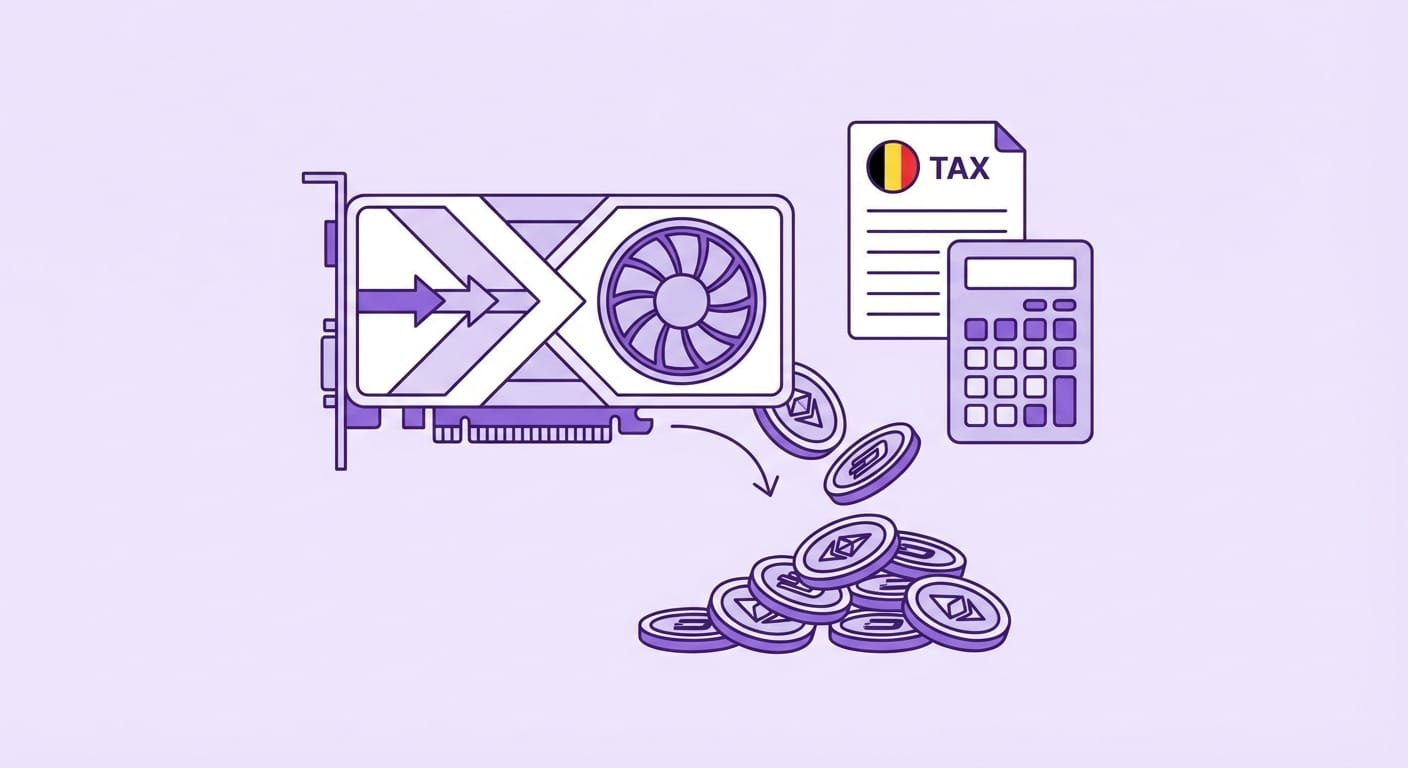
Do you mine crypto with a GPU, ASIC or via cloud mining? Those rewards are taxable in Belgium - even if you have not sold them yet. This article explains how mining is treated for tax purposes and when you are considered a hobbyist or a professional miner.
What is crypto mining?
In mining you use computing power to validate transactions on a blockchain. In return you receive crypto as a reward. This can be done with your own hardware (GPU or ASIC), via a mining pool, or via cloud mining where you rent computing power.
FOD Financiën (the Belgian tax authority) makes no distinction between these forms: the result is the same - you receive crypto as compensation for effort provided.
How is mining taxed in Belgium?
Hobby mining: miscellaneous income
Most individual miners fall under the regime of miscellaneous income (diverse inkomsten). The EUR value of your mining rewards at the moment of receipt is taxable at 33% + municipal tax.
You are considered a hobbyist as long as mining is not a structural, regular activity with a profit motive and significant investments.
Professional mining: professional income
If the tax authority determines that your mining is professional, your income falls under progressive rates (25% to 50%) plus social contributions. Indicators of professional mining:
- Substantial investment in hardware or infrastructure
- Structural, regular activity over longer periods
- Clear profit motive and organisation
- Mining as a primary or significant secondary source of income
Cost basis for later sale
The EUR value at the moment you receive mining rewards becomes the cost basis of those tokens. This is crucial for calculating your capital gain (meerwaarde) on a later sale.
On sale: capital gains tax
From 2026 a capital gains tax of 10% applies to profits from the sale of crypto assets, with a annual exemption of EUR 10.000. The capital gain is the difference between the sale price and your cost basis (= value at receipt).
✅ Updated: The capital gains tax on crypto was approved by the Chamber on 3 April 2026. Cryptotax is fully adapted to the new legislation.
| Moment | Tax | Rate |
|---|---|---|
| Receipt (mining reward) | Miscellaneous income (hobby) | 33% + municipal tax |
| Receipt (mining reward) | Professional income (professional) | 25%–50% + social contributions |
| Later sale (capital gain) | Capital gains tax (from 2026) | 10% (after EUR 10.000 exemption) |
Can you deduct costs?
Hobby mining: No. With miscellaneous income, a flat-rate cost deduction is already factored into the rate. You cannot deduct electricity or hardware separately.
Professional mining: Yes. As a professional miner you can deduct proven professional expenses: electricity, hardware depreciation, internet costs and maintenance. Keep invoices and supporting documents carefully.
Practical example
Alice mines as a hobbyist with a GPU rig and receives 0,01 BTC per month. In January 2026 BTC is worth EUR 80.000.
At receipt (January 2026):
- Taxable amount: 0,01 × EUR 80.000 = EUR 800
- Tax (miscellaneous income): EUR 800 × 33% = EUR 264 (+ municipal tax)
- Cost basis per BTC: EUR 80.000
At sale (June 2026, BTC at EUR 100.000):
- Sale proceeds: 0,01 × EUR 100.000 = EUR 1.000
- Capital gain: EUR 1.000 − EUR 800 = EUR 200
- This falls within the annual exemption of EUR 10.000, so no additional tax
Frequently asked questions
Is cloud mining the same as regular mining?
For tax purposes: yes. Whether you run your own hardware or rent computing power, the result is the same - you receive crypto as a reward. The EUR value at receipt is taxable.
Do I have to declare mining if I have not yet sold?
Yes. Mining rewards are taxable at receipt, regardless of whether you sell them. The EUR value at the moment of receipt must be declared as miscellaneous income.
How does the tax authority know I am mining?
Through DAC8 (automatic data exchange) and the fact that blockchains are public. As soon as you send mined crypto to an exchange, the link is established. Correct declaration prevents problems later.
How Cryptotax processes mining
Cryptotax recognises mining rewards automatically on import. The EUR value at receipt is recorded and used as cost basis for later sales, including correct FIFO calculation.
Start a free scan to map your mining rewards and other crypto transactions.
Want to read more? Check our guides on staking tax, airdrop tax and taxable transactions.
Sources:
Disclaimer: This article is purely informational and does not constitute individual tax advice. For specific cases: consult a recognised Belgian tax adviser or request a ruling from the Dienst Voorafgaande Beslissingen.